Continental Circus - part 6: New developments
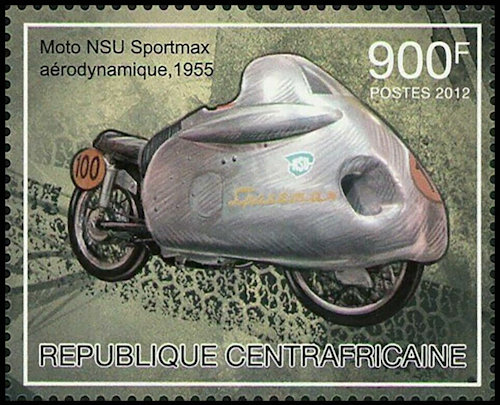
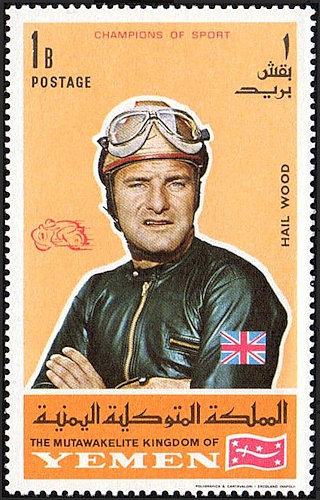
Despite the rise of the Japanese and Italian factory teams, privateers still achieved some successes in 1962. Paddy Driver and Jack Findlay, for example, were successful in the 350 and 500cc classes. However, in the lighter classes, motorcycles were scarcely available except for the factory teams. The 250cc NSU Sportmax was never available in large numbers, although Mike Hailwood, Bob Brown, and Dickie Dale did race them on the Continent.
There were also a handful of privately owned MVs, 250cc Guzzis, and a few 250cc Adlers. Many ex-factory MZ motorcycles ended up in the hands of Eastern European riders, but these were seldom seen in the West.
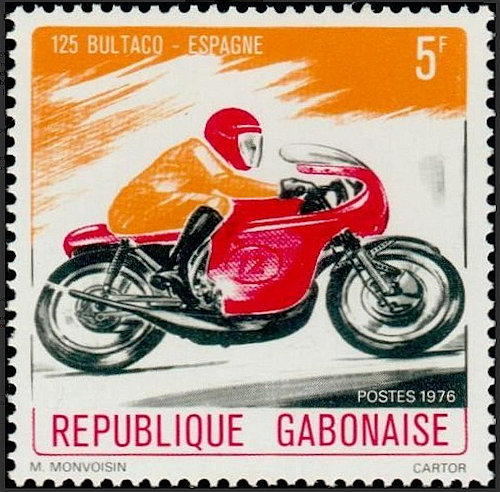
The first new machine in the lighter classes was the Bultaco 125cc in the early 1960s. This company was founded in 1958 when Montesa retired from racing and Señor Bulto, a racing enthusiast, started his own company.
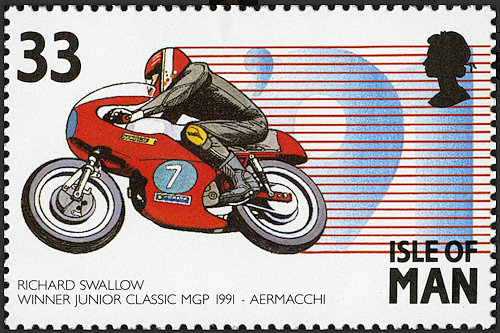
Another brand that appeared was Aermacchi, which made its debut at the TT Assen in 1960 with a motorcycle with a pushrod engine, with Alberto Pagani as rider.
Also appearing in 1962 was the EMC 125cc, based on Walter Kaaden's MZ racers, with which riders such as Mike Hailwood and Phil Read achieved many successes.
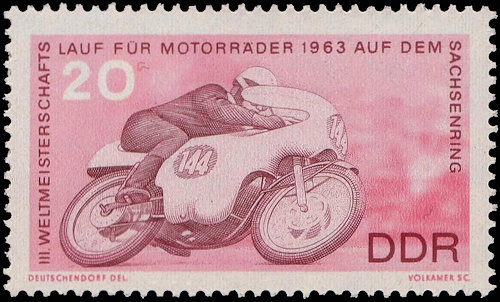
MZ 125cc road racing bike
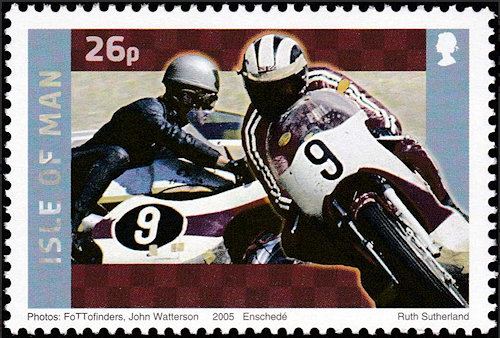
Phil Read (on Yamaha)
In 1963, Honda began producing the production racer CR93, a two-cylinder, 125cc four-stroke and a major competitor to the 125cc Bultacos. While the Hondas were reliable, maintenance was much more complex than that of the simple, single-cylinder, two-stroke Bultacos.
Production of the Norton Manx virtually ceased in 1961, after the factory was taken over by AMC. Production of the Matchless G50 and AJS 7R ended in 1963.
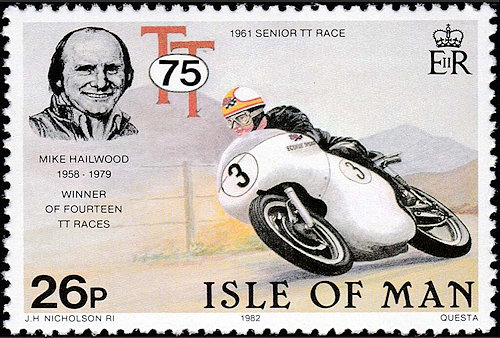
Mike Hailwood on Norton
The only one to achieve any success from 1962 onward was Jack Findlay on the Bob McIntyre G50 Matchless. He would become the Continental Circus's top privateer for the next six years.
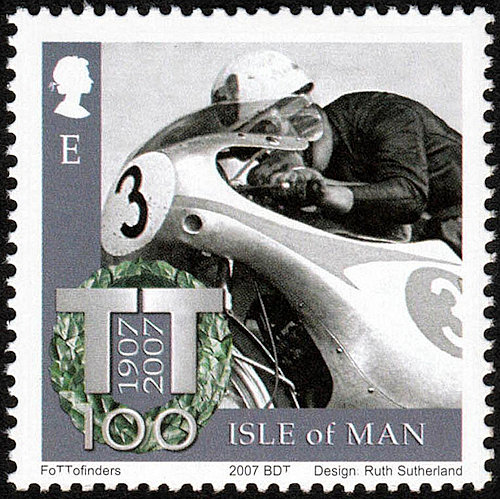
Bob McIntyre
There were also developments in the tire field. Avon withdrew from racing and Dunlop introduced the "pear tire," the KR73.
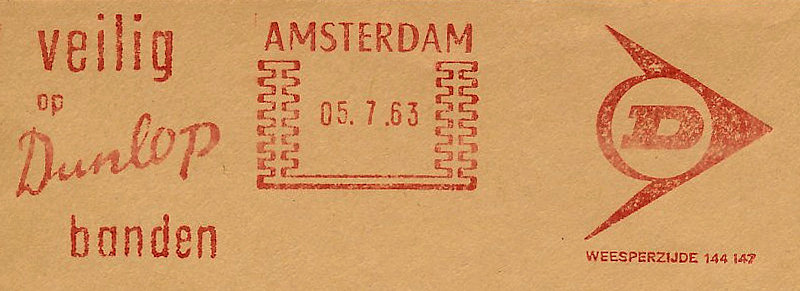
Text: Safe on Dunlop tires
This tire had flatter sidewalls than was common up until then, increasing the contact area when leaning the bike. However, this tire tended to break away during abrupt turns, much to the dismay of some riders. The introduction of this tire led riders to develop a new riding style, leaning their knees or entire body more into the turn, allowing them to keep the machine more upright. Later, the new riding style also led to the adoption of high exhausts to increase ground clearance. This, combined with the use of special materials, such as titanium for the connecting rods, naturally resulted in higher speeds.
In 1963, a G50 reached a speed of 214.4 km/h (133.1 mph) on the Isle of Man, and a 350cc AJS 7R reached 202.56 km/h (126.6 mph). Speeds that would have been considered impossible just a few years earlier.
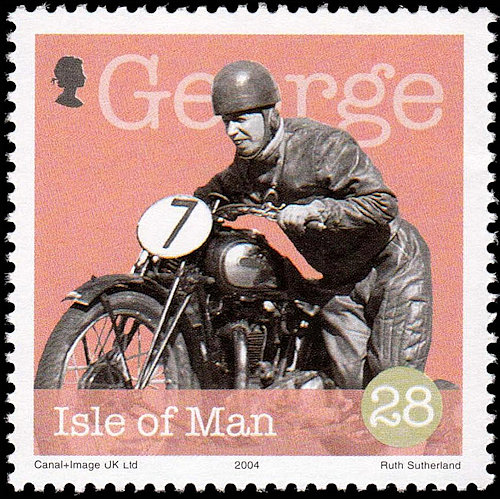
George Formby as motorcycle racer George Shuttleworth
To be continued
Hans Baartman
Top - Back to former page - Home |