Discussion
Although I count our MFN secretary Nico among my closest (stamp) friends, and regard him as a true expert on philatelic regulations and rules, I am going to more or less rejoin him here. This is in response to the comments he posted in the Newsletter regarding the issues produced by Stamperija, IGPC and other agencies.
We regularly discuss this sort of stamps together, with him taking the view that they are "not collectable" and me defending the view that they "are acceptable".
Generally, the rules set out by the FIP (Fédération Internationale de Philatélie) in various publications are used as a guide for collecting stamps. Of particular importance in this regard are the publications listed in the FIP's Regulations and Guidelines, such as the:
- General Regulations of the FIP for Exhibitions (GREX)
- General Regulations of the FIP for the Evaluation of Competitive Exhibits at FIP Exhibitions (GREV)
The IREX (where the "I" stands for "Individual", meaning "tailor-made rules" drawn up specifically for a single exhibition) are primarily intended to prevent political statements from being made on exhibition premises.
I shall confine myself here to the document most relevant to us: the SREVs (Specific Regulations etc.) & Guidelines, which set out the rules for each class. Here, I shall limit myself to consulting the thematic rules, as that is the category we fall under, but generally speaking the rules are the same for all classes.
The Guidelines provide examples of philatelic items that may be collected, used and not used.
For instance the next items are mentioned as desirable:
- postage items: stamps, stamp booklets
- postal items, such as postcards, pre-franked envelopes, etc.
- meter franking, also known as "red franking"
- computer generated stamps/labels, for example FRAMA and Epelsa labels, SmartStamps etc.
- modifications made to postage items, such as overprints, surcharges and punch perforations, also known
as "perfins"
- and a long list of other philatelic side issues.
As unwanted the following items are listed:
- fictional issues from non-existent territories and countries
- issues from excluded countries
- issues by organisations without postal service
- illegal unwanted issues as indicated by the UPU and FIP
- and a number of other private issues.
The penultimate sentence above is underlined because the discussion focuses on it.
The full Guidelines can be found at:
www.f-i-p.ch/wp-content/uploads/TH_GUIDELINES_2018_New_FINAL.pdf
I would like to defend my position here by referring to the issues from African countries that have entrusted their stamp production to Stamperija. Stamperija Ltd, based in Vilnius, Lithuania, is a well-known producer and distributor of stamps and philatelic products for various postal services worldwide, often focusing on developing countries. They specialise in the design and issue of thematic stamps, including motorcycle philately. Stampera, Stamperija's online shop, offers a wide range of stamps covering all sorts of themes.
Various postal administrations/governments have outsourced the issue of stamps to agencies in different countries. Among others, the Republic of Guinea and Guinea-Bissau have entrusted this to Stamperija. Philatelists sometimes regard these stamps as "manufactured" or not locally available, but they are generally authorised by the respective national postal services; and that makes them official stamps.
Another argument is that there are virtually no letters to be found that have been franked with these stamps. But when I look at my collection, I see a large number of stamps that, in the 53 years I have been collecting stamps, I have never found on a "genuine" letter, other than on "made-up" items (FDCs or mail from fellow collectors).
The postage value is also often called into question. A block from the Central African Republic featuring Elvis, shown elsewhere in this NB, with six 650 FCFA stamps amounts to €5.95, which is less than a euro each. And how much do we pay to send a single letter??
I won't deny that there are many, many stamps for these countries coming onto the market, but aren't we being a bit hypocritical? The Dutch postal service could manage just fine with a few stamps of different denominations, yet it is already issuing 119 (in 2025) stamps featuring attractive designs, not to mention all sorts of stamp collectibles such as commemorative stamps, silver stamps, crypto stamps, and so on and so forth.
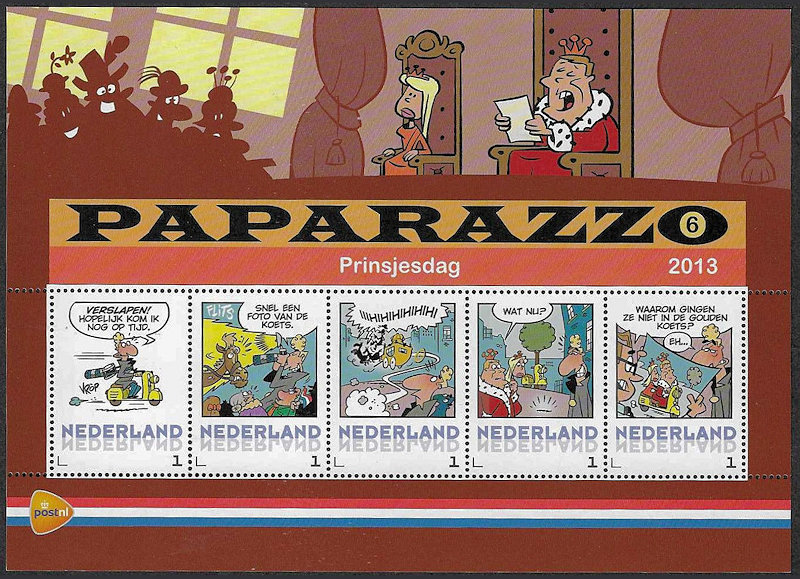
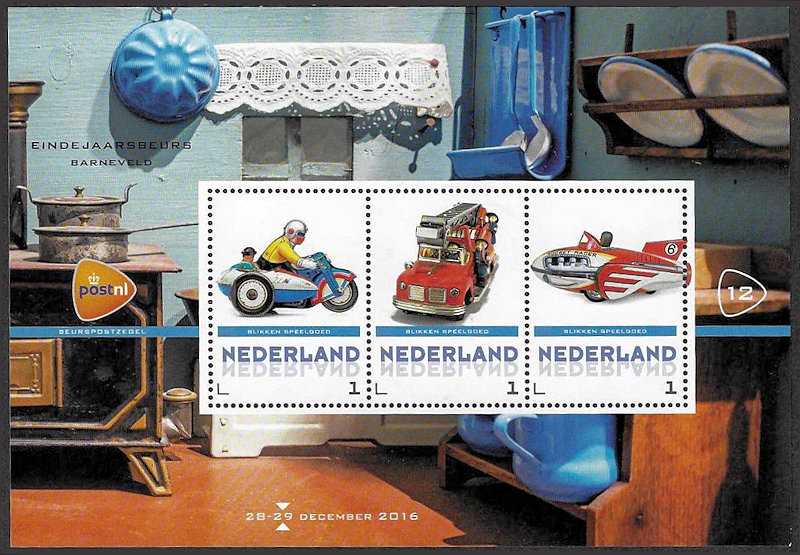
Okay, there are considerably fewer than in Guinea-Bissau (an average of 1000 per year).
And which of you has recently seen a letter posted in Japan and normally franked (i.e. not a philatelic item such as an FDC), bearing one of the 393 stamps issued in 2023 (almost all of which, just like our Dutch stamps, are available in blocks, sheets and stamp booklets)?
In the 1970s, a Swiss firm also produced stamps on a large scale for Middle Eastern countries; around 1980, the Crown Agency and IGPC eagerly joined in, flooding the market with expensive stamps from the Caribbean and British colonies; and around 1990, the former Soviet states flooded the market with vast quantities of stamps, and we didn’t want them all.
That said, we always agree that you're free to collect whatever you like and want to collect. And if it complies with FIP rules, it's certainly welcome in my album. If you don't wish to contribute to Stamperije's fundraising efforts, you can always purchase the stamps you want later from the many regular stamp dealers.
The FIP can provide guidance, but it cannot dictate!
Hans de Kloet
Top - Back to former page - Home |