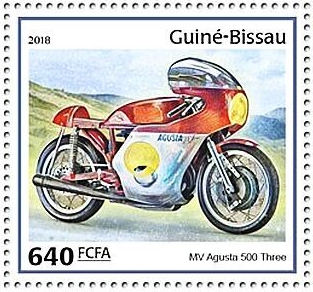
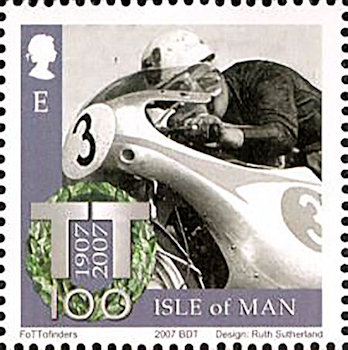
Continental Circus part 8: the changes
In 1968 several changes occurred in the field of participants that would prove to be of great importance for the future of the Continental Circus. First, there was the 250cc Yamaha TD1C in a Bultaco frame, ridden by Rod Gould. This machine would be further developed into the TD2 and its bigger brother, the 350cc TR2.
The Aermacchi was now "best of the rest", with some riders opting for this engine in a Rickman frame or, like Kel Carruthers, an Aermacchi engine in a Drixl frame from Switzerland.
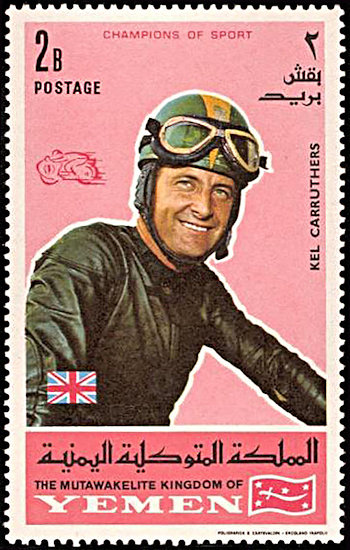
Both Kawasaki and Yamaha gained increasing popularity among riders. Despite the threat of two-strokes, many private racers still opted for the English single-cylinders to earn a salary with their machines.
For instance John Hartle finished 3rd in Rimini on his Matchles G50, behind Agostini's MV and Hailwood's Honda HRS. HRS stood for "Hailwood Racing Special" and was in fact a Honda with a special frame built by Ken Sprayson at Hailwood's request.
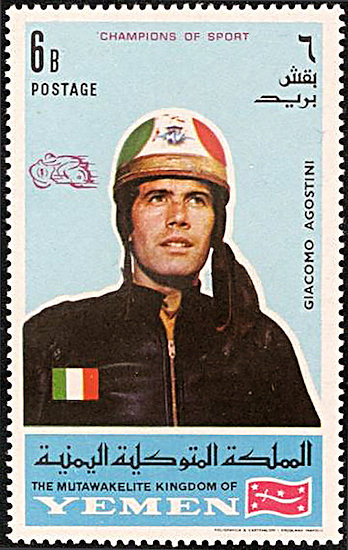
In the 350cc class, Bill Smith managed to win the race in Le Mans on his ex-factory Honda. Kel Carruthers took second place twice there on his 350cc Aermacchi and his 500cc Norton. Rod Gould rode to third place. So, for the private riders, there were still opportunities for success and the associated prize money. Podium finishes were also achieved at the races in Cesenatico (I), Cervia (I), and Imola (I) by, among others, John Cooper on the 500cc Seeley and John Hartle on the Matchless G50.
The races in Salzburg (AU), at the Nürburgring (D), and in Hockenheim (D) also yielded successes for private riders in both the 500cc and 350cc classes.
And in Tubbergen (NL), John Dodds managed to take the win, followed by Robin Fitton, both on Nortons. John Cooper in particular had a good season, including 3rd place in Cervia (I), wins in Tilburg (NL) in the 250cc (Yamaha), 350cc (Yamaha) and 500cc (Seeley), and 3rd places in Imola and Cesenatico.
Even though the MV's and Hondas were unbeatable, men like John Hartle, John Cooper, Jack Findlay, Bob McIntyre, and John Dodds still managed to achieve quite good results, albeit with considerable riding skill and sometimes with quite some mechanical feats.
That's why some motorcycles occasionally looked like they had been ridden in all weathers for several years, and with the inevitable scratches and dented exhausts, it was a stark contrast to the factory bikes, which looked much neater. But then again, speed was more important than cosmetics!
The race in Zolder (B) in July was a sign of the impending invasion of the 2-stroke era. Besides Billie Nelson's win in the 250cc on a Yamaha, second place went to Jack Findlay on a Bultaco, and the podium was completed by Rex Butcher on a Suzuki. Only the 500cc class remained a stronghold of 4-strokes, particularly the Matchless, Norton, and Paton motorcycles.
In this year, 1968, the complete 125cc field was filled with 2-strokes and was dominated by the factory bikes of MZ, Bultaco and Yamaha.
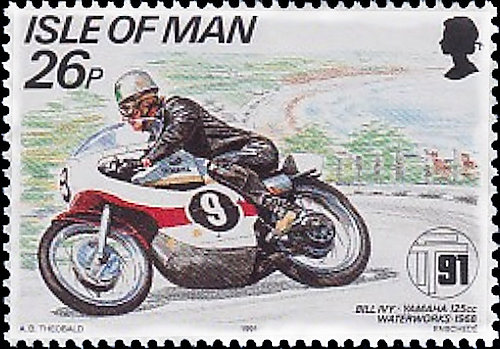
Bill Ivy on Yamaha
On the contrary, the Aemacchi was still the designated bike for private riders in the 350cc class.
It was a matter of waiting for the end of the 4-stroke era, which was approaching sooner than many had expected.
To be continued
Hans Baartman
Top - Back to former page - Home |