A liberation stamp with a special story
By Jan C.A. van der Lubbe
This article was previously published in the Dutch monthly magazine Filatelie (issue no. 5-2026) and is reproduced here with the permission of the author and Filatelie.
1. The 1999 Liberation Stamp
I have lived in Bodegraven for nearly forty years, and my children grew up there as well. As a child, I used to collect stamps, but I haven't done anything with that since; the albums are sitting in a box up in the attic.
Although I no longer collect stamps, there is one particular (Dutch) stamp in which I take a more than passing interest: a 1999 liberation stamp that features my mother, shown sitting on the back of a Canadian soldier's motorcycle in May 1945. She is the woman directly behind the Canadian soldier, see image 1.
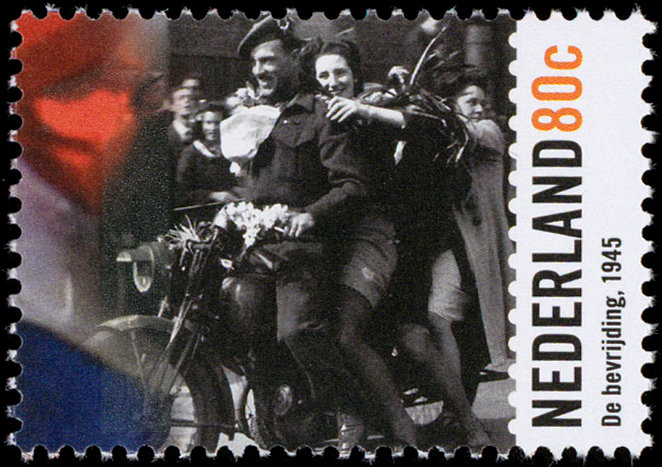
Image 1a. The 1999 Liberation Stamp
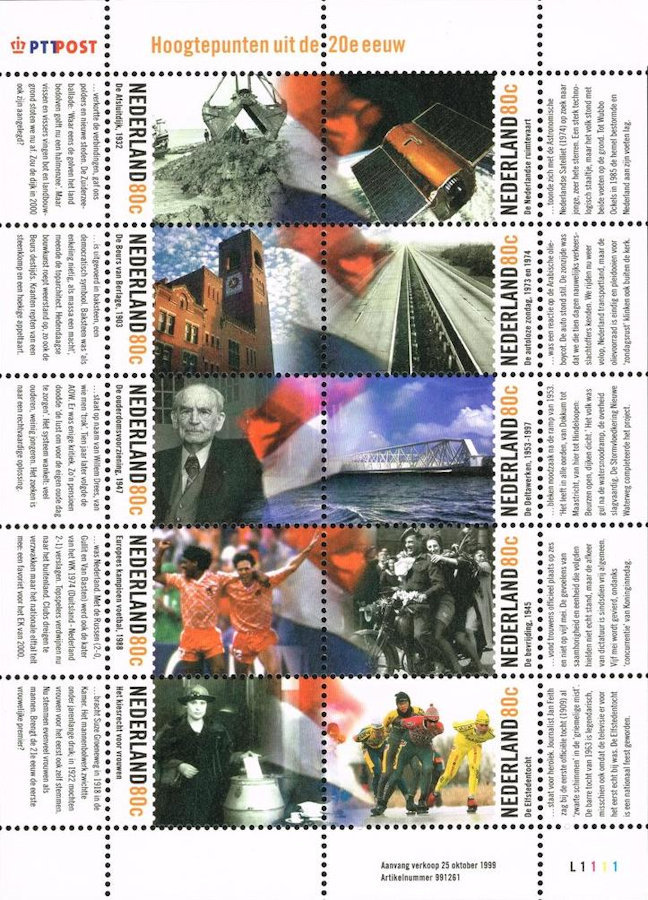
Image 1b. The complete stamp sheet "Highlights from the 20th century"
On 31 January 2026 a stamp, coin, and postcard fair was held at "De Brug" in Reeuwijk. It was organized by the local philatelic club Bodegraven-Reeuwijk. I decided to go and have a look. I already own that particular stamp, but I was hoping to find a few extra copies, which would of course be a nice thing to have for my children (or grandchildren) later on.
February Strike and Liberation
There is a remarkable story behind that postage stamp. At the outbreak of the war, my mother, Theodora (Thea) Maria van der Laan (Amsterdam 1922 – Alkmaar 1988), was living in Amsterdam and working for the Municipal Energy Company (GEB) there. Before long, the first raids took place in Amsterdam, during which hundreds of Jewish men were rounded up. Many of her Jewish colleagues were also at risk. My mother became involved in the resistance and took part in the February Strike, which began in Amsterdam on February 25 and 26, 1941, and spread from there to the surrounding areas. It was the first large-scale act of resistance against the German occupiers in the Netherlands. Naturally, such actions were not permitted for someone employed by a government institution, as my mother was. Some were executed by firing squad at the Waalsdorpervlakte near Scheveningen. Others were sentenced to ten years Zuchthaus (penal prison), to be served in German penitentiaries. My mother's punishment was a reduction in her salary.
My father, Johannes H. van der Lubbe (Amsterdam 1920 – Alkmaar 1999), also took part in the February Strike. He was arrested together with his father near Halfweg, outside Amsterdam. He was also involved in the resistance and eventually ended up in the Amersfoort concentration camp. My parents were dating at the time; as you can imagine, it was not a carefree period for their relationship. When liberation finally arrived in May 1945, they were immensely relieved. My mother went straight to Dam Square in Amsterdam to welcome the arriving Canadians and join in the celebrations. My father, meanwhile, was in a sanatorium in Laren. Although he had been liberated by the Canadians, his health was in a very poor state. He weighed only 41 kilograms and had sustained damage to his lungs (note 1). After the war, once my father had recovered, they married, and I was born.
The liberation stamp
And then came 1999. My mother had passed away years earlier. At the time, I was studying in Delft and Amsterdam, when suddenly, to my great surprise, I began seeing my mother everywhere. The PTT (the Dutch postal service) had released a series titled "Highlights of the 20th Century". One of the stamps was dedicated to the Liberation; it featured my mother, sitting on the back of a motorcycle behind a Canadian soldier. The stamp was visible everywhere. The PTT used it for posters, and it was displayed in post offices and above letterboxes. The photograph was taken on May 5, 1945, on Dam Square in Amsterdam. The photographer was Aart Klein (Amsterdam 1909–2001), who worked for the photo press agency Polygoon at the time. It has since become an iconic image (see Figure 2). My mother is the person sitting directly behind the Canadian soldier. If you look closely, you can see that there are two other women on the back of the motorcycle as well; unfortunately, their names are not known.
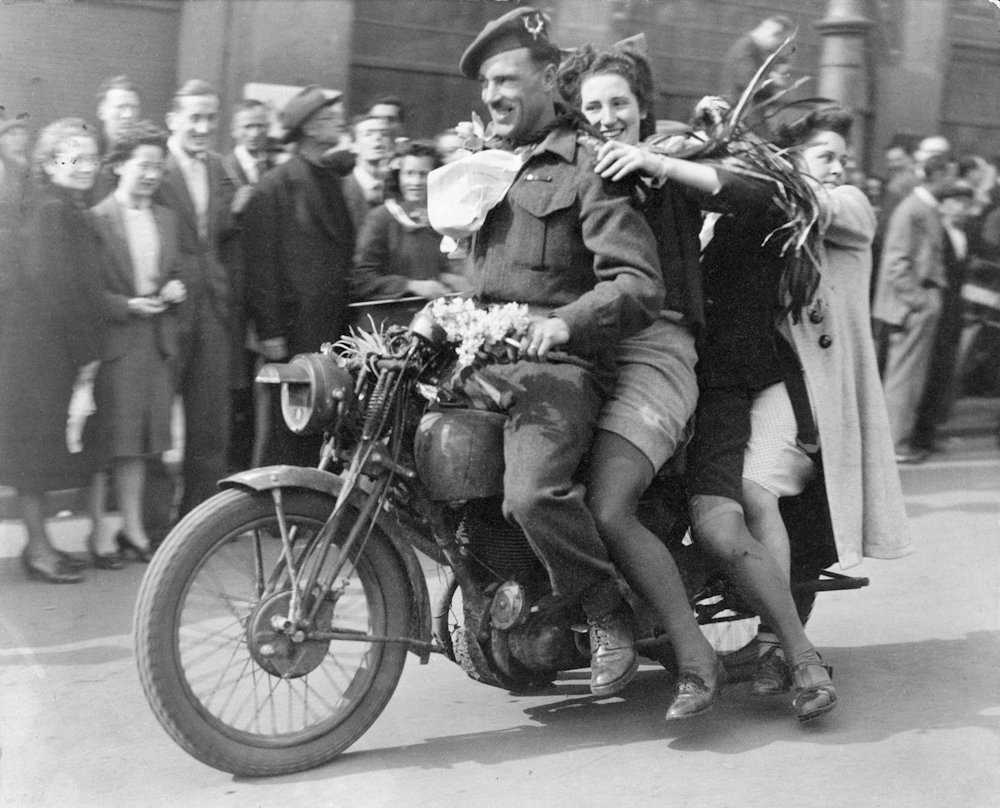
Image 2. Entry of the Canadian liberation army into Dam Square in Amsterdam, 5 mei 1945, photo Aart Klein (note 2)
The Canadian
The postage stamp did not stay unnoticed in Canada either. The Canadian media featured various articles about this special Dutch stamp, as well as about the Canadian man who was riding the motorcycle. He turned out to be William L. Roberts (Ontario 1915 – Vancouver 2003). He had married shortly before the war and was sent overseas in November 1939 to fight. In total, he would be away for six years, with a brief break in 1942. He was involved in operations in North Africa, Italy, and Germany. He was wounded twice. The first time in Italy, when a mortar shell struck him, causing injuries to his arm, hip, shoulders, and face. The second instance was truly tragic. Following the liberation in May 1945, the Canadians were finally permitted to return home, but this naturally took time; the number of ships available for transport back was limited. Consequently, many had to wait in the Netherlands for several more months before they could return to Canada. During this period, various programs were organized in the Netherlands to entertain the liberators and make their stay more pleasant. A month after the liberation, while awaiting his return to Canada, Roberts sustained a serious head injury during an explosion at an ammunition depot (near Leiden?). His recovery in Canada was a long process. In later years, he struggled with speech and lost the ability to write. He passed away on December 9, 2003, at his home in West Vancouver.
Several years ago, I connected with some of his children and grandchildren via the internet, and I remain in touch with them to this day. It has all been a truly remarkable experience.
Because of that postage stamp in the Netherlands, William Roberts also became a well-known person in Canada. Newspapers and television covered his story. At the Seaforth Museum in Vancouver, there is even a display case dedicated to him. Featuring his uniform, his motorcycle, his medals, and, of course, that legendary photograph with my mother… See images 3 and 4.
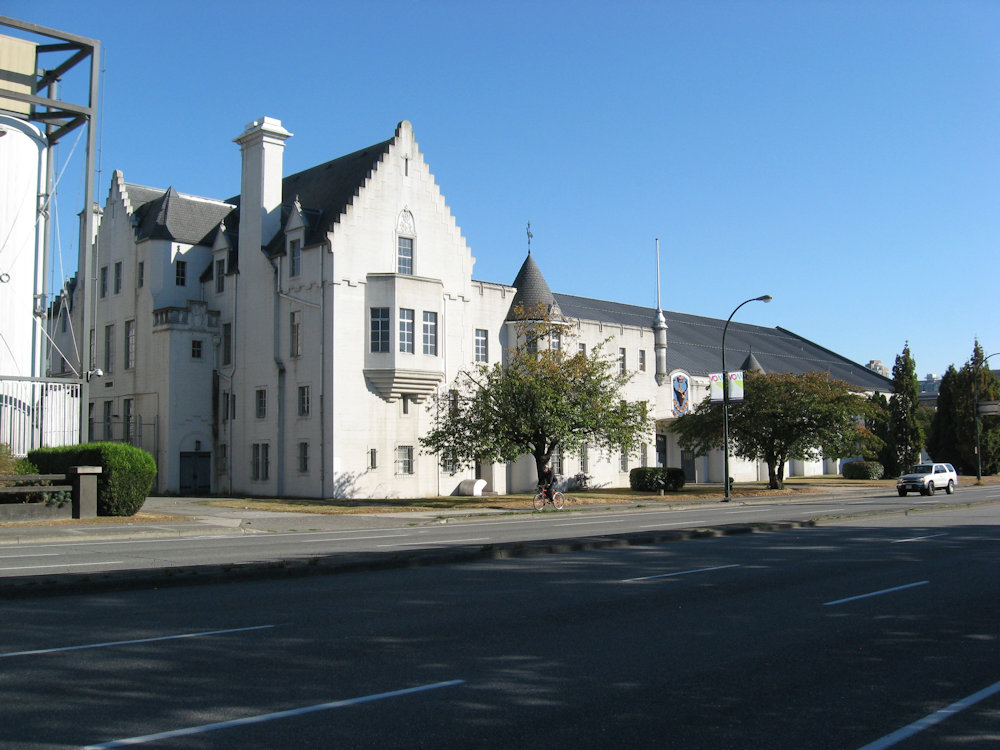
Image 3. Seaforth Museum, Vancouver
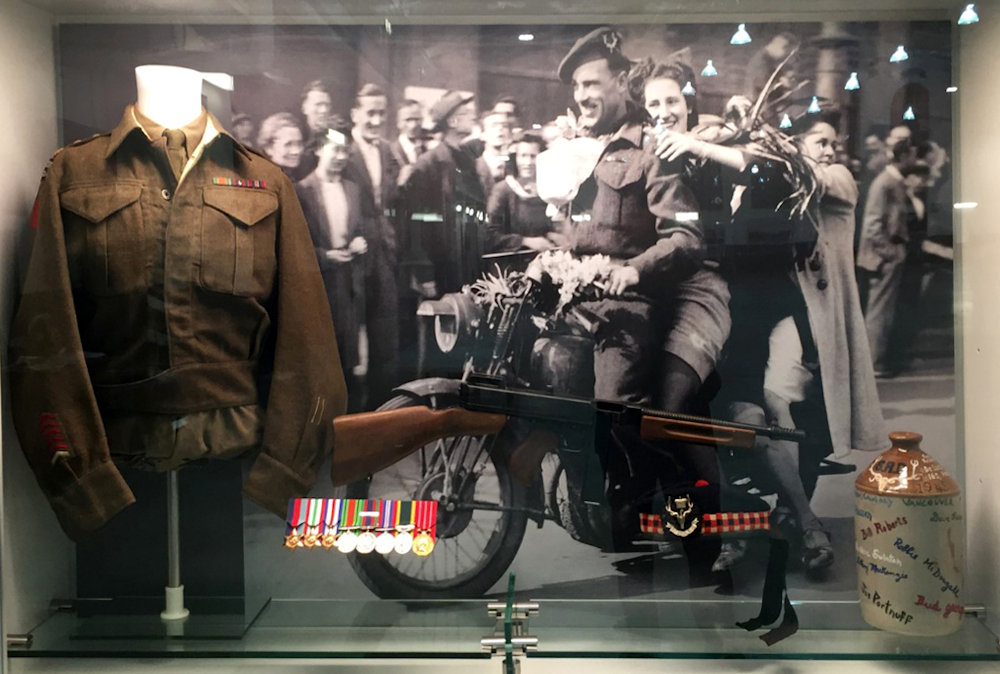
Image 4. The display case featuring W.L. Roberts in het Seaforth Museum, Vancouver, Canada
And a few years ago, a film was discovered at Beeld en Geluid in Hilversum in which my mother and the Canadian man can be seen in moving images.
Motorcycle Philatelists Netherlands (Motor Filatelisten Nederland - MFN)
Naturally I find that liberation stamp appealing because my mother is depicted on it. However, there are others who view the stamp in an entirely different light. They have no special interest in the Canadian soldier, let alone my mother, but instead they are focused on the motorcycle. There is even a dedicated group: "Motor Filatelisten Nederland" (in short MFN), or Motorcycle Philatelists Netherlands. They specialize in collecting stamps that feature motorcycles (note 3). They have also published some information regarding this liberation stamp (note 4). According to the experts, the motorcycle is a pre-war Matchless GL3. Just to let you know it, I myself know nothing about such things.
What's nice is that they found another stamp with the same photo. In 2019 there was a block edition of the Caribbean Dutch isle Saba with the theme "The Kingdom of the Netherlands", with the subtitle "the liberation of the Netherlands 1945". That block contains three stamps with motorcycles, one of which shows my mother (note 5).
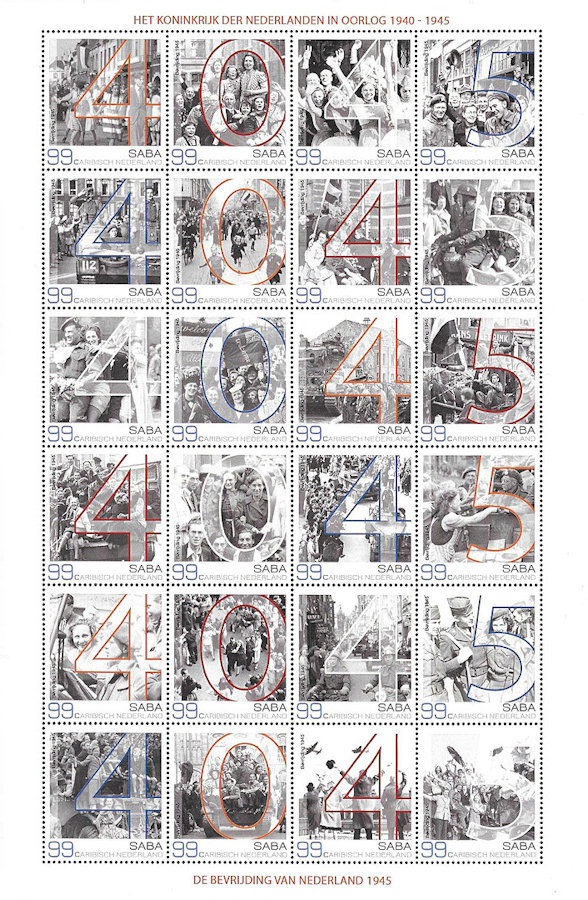
Image 5a. Saba: stamp series "the liberation of the Netherlands 1945"
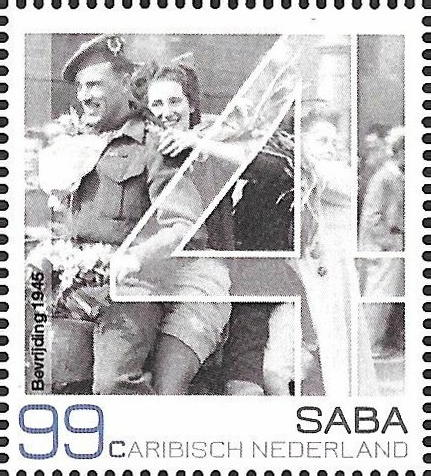
Image 5b. The stamp with the well-known photo
The stamp fair in Reeuwijk
I had never been to a stamp fair before. Upon arrival, I briefly explained my situation and asked where I might best find what I was looking for. Without much difficulty, I managed to find the Dutch stamp I needed. I was even able to purchase a few souvenir sheets from the "Highlights of the 20th Century" series, which include that particular liberation stamp. All in all, my visit was a success.
It seems the local newspaper noticed this; a few days later, I opened the paper and was surprised to see a photograph from the fair, along with an image of that very stamp. One thing leads to another, as they say…
I still haven't found that stamp from Saba. I'm also not entirely certain if 2019 is the correct year of issue. If any of you happen to have more information on this, I would be very grateful to hear from you.
Notes
1. "Klaar voor het verzet" (Ready for the resistance), by Jan C.A. van der Lubbe, In: Informatiebulletin
Nationaal Monument Kamp Amersfoort, Number 31, march 2010, p. 22-27.
2. Collection Nederlands Fotomuseum, Rotterdam, inventory no. AKL-750505.
3. Website Motor Filatelisten Nederland: www.mfnl.nl
4. "Canadees trots op zijn beeld op Hollandse zegel", in: Newsletter Motor Filatelisten Nederland,
no. 51, march 2000.
5. "Heard, Seen, Read", in: Newsletter Motor Filatelisten Nederland, no. 129, September 2019.
© dr.ir. Jan C.A. van der Lubbe, Bodegraven, 2026
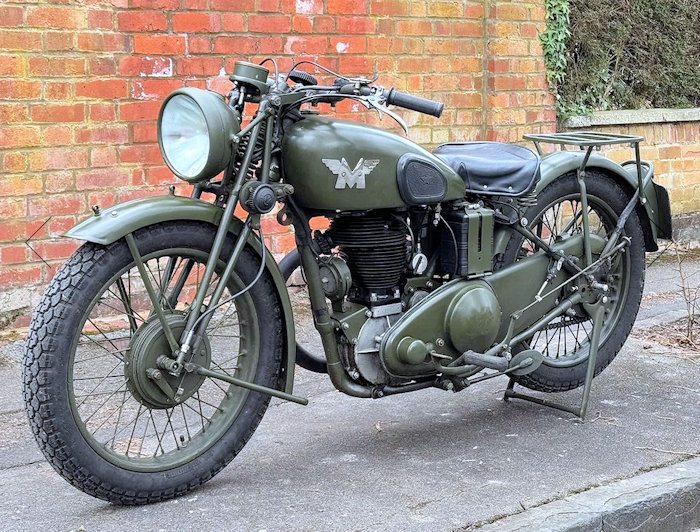
Matchless G3 (the later G3/L had telescopic front forks, thus can not be the motorcycle on the picture)
Top - Back to former page - Home |