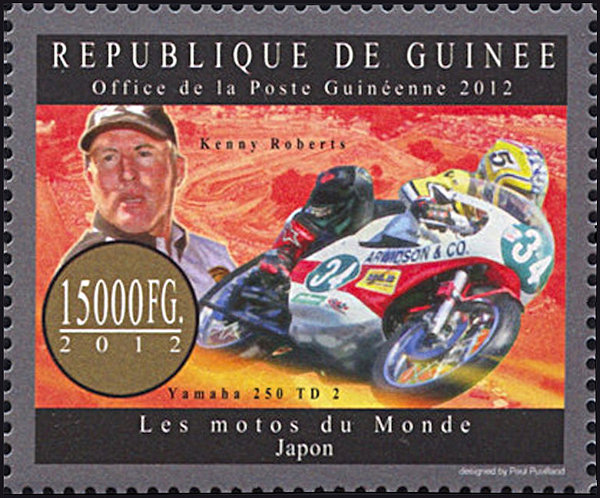
Continental Circus part 9: the 2-stroke revolutionBy 1969 it had become clear that two-stroke engines were gaining the upper hand, starting in the 250cc class. Rod Gould had already achieved success with them in 1968, which helped boost the popularity of two-strokes, particularly among privateer racers. For some Yamaha TD1C-model motorcycles the cylinder capacity was increased to allow them also to compete in the 350cc class. Eventually, in 1969, the TD2C became available for the 250cc class, and the TR2 for the 350cc class. |
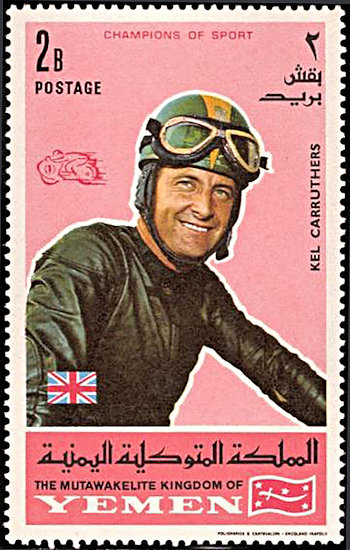

Although Simmonds was a factory rider, it didn't amount to much; he had to carry out his own maintenance and could count on only a few spare parts from Japan.
In the 500cc class there were still some four-stroke machines that achieved success. In 1969 the Linto also made its debut, with riders Keith Turner and Steve Ellis both initially securing strong positions at Le Mans, but ultimately they finished several laps behind the winner, Agostini.
Also riding a Linto, Gyula Marsovsky set a new lap record at Le Mans, averaging 181.7 km/h, and finished in 6th place.
The Linto's engine was essentially two Aermacchi units joined together; it had a top speed of approximately 256 km/h, but unfortunately it was also fragile. That same year, another two-cylinder machine, which proved to be reliable, entered the scene: the Paton, ridden by Billie Nelson.
To be continued
Hans Baartman